

 Lockout help
 Home locks
 Business locks
 Car access
 Car keys
 Rekeying
 Lock repair
 Garage doors
Change the key arrangement
Keep a useful lock. Change which key works.
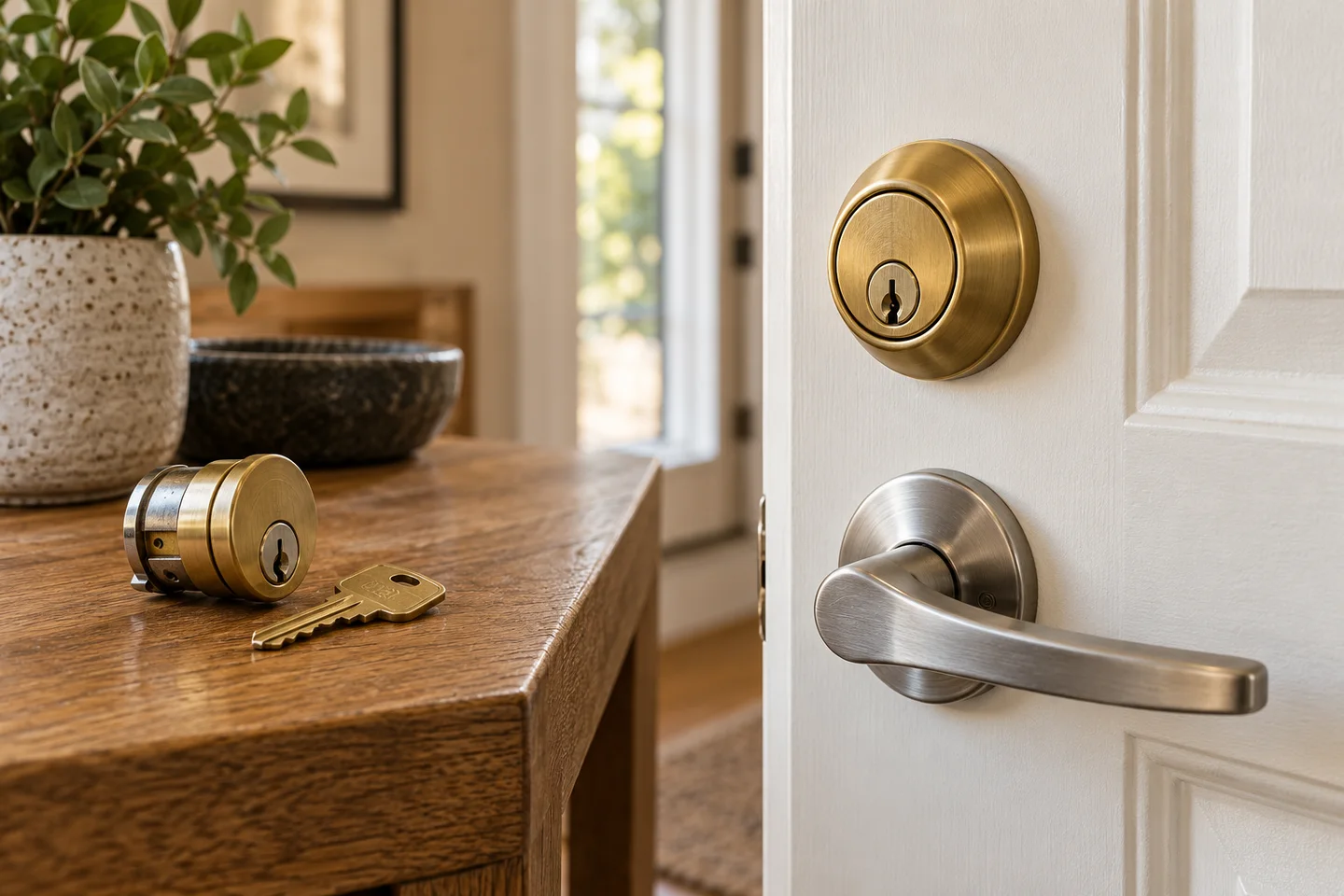
Rekeying changes the key arrangement inside a compatible cylinder. It can fit a move or key handover when the lock itself is working and you want previous keys to stop operating that cylinder.
01 /
Separate access control from hardware condition
A missing household key, a move or a business handover can leave uncertainty about who has a copy. The first question is which doors that key operates. The second is whether those locks work reliably. Rekeying addresses the key arrangement; it does not straighten a door, repair a loose handle or correct a damaged mechanism.
If a lock sticks, fails to secure the door or behaves differently as the door closes, describe that before planning a key change. Lock repair and replacement may need to be considered alongside rekeying. Treating those as distinct needs helps you choose work that resolves both access concerns and everyday use.
02 /
Build a small inventory before the call
Write down each keyed entrance and identify which key opens it. Include separate deadbolts, secondary entrances and any private pedestrian door to a garage. Note the number of people who need the finished keys. You do not need to remove a lock to explain it; a description of both sides and any visible brand is a useful start.
For a Belmont apartment, mark the difference between your unit door and shared building hardware. Explain whether one key currently works at both. Our residential locksmith page covers those household and shared-entrance questions. Involve the responsible owner or manager before changing a common entrance used by other occupants.
03 /
Can these doors share a key?
If carrying fewer keys is part of the goal, say so when describing the locks. Different cylinders do not automatically accept the same key, even when their handles look similar. Existing hardware, its condition and the required key arrangement determine the available options. Keep the desired result separate from an assumption about what can be retained.
At a business, identify who needs continuing access and whether any key serves a shared entrance outside your control. Our commercial locksmith page explains how a door list and an authorized contact help organize a staff or premises handover. A clear record of the new key distribution is as useful as the change itself.
04 /
Decide what should change after the work
Specify which old keys should stop working, which doors should share a key if compatible and how many finished keys are needed. If only part of a building is changing, identify the unaffected shared doors too. This makes it easier to discuss the scope and avoid discovering an overlooked entrance later.
Call 857-226-3269 with the Belmont address, door count and reason for the change. Ask about compatibility, current availability and the proposed charges. Our new key or new lock guide offers a fuller comparison if you are still weighing a key change against replacing hardware.
A little clarity
before you call.
Does rekeying mean replacing the whole lock?
Rekeying changes the key arrangement within a compatible cylinder while retaining suitable existing hardware. Some locks or conditions may call for another approach.
Will rekeying fix a lock that sticks?
A sticking lock needs its operating symptom assessed separately. Changing the key arrangement does not by itself correct damaged hardware or door alignment.