

 Lockout help
 Home locks
 Business locks
 Car access
 Car keys
 Rekeying
 Lock repair
 Garage doors
Private residential garages
Is it the garage door—or the door beside it?
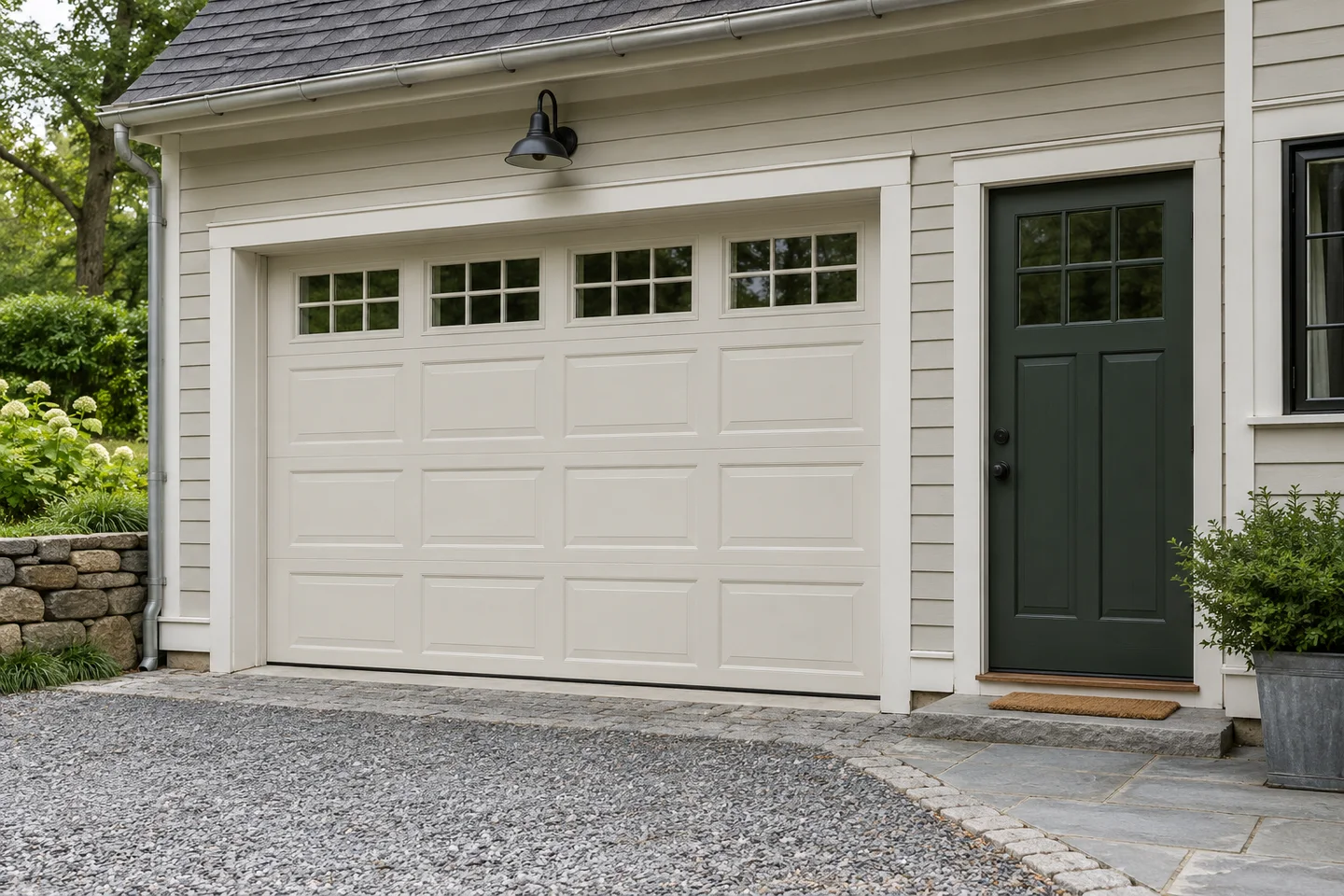
A garage repair enquiry starts by identifying what is failing. The large moving door, its opener and a separate walk-through door are different parts of the garage.
01 /
Describe the movement you observed
For a private residential garage door, explain whether it stayed closed, stopped partway, reversed or ended up uneven. Say whether you heard the opener operate and whether the behavior followed an impact or unusual noise. Report what you already observed; there is no need to repeat a movement that appeared unsafe just to gather more detail.
Keep people and vehicles clear of a damaged or partly open door. Avoid forcing it, handling cables or springs, or trying to lift a door that looks uneven. Those observations are enough to begin the discussion while leaving the moving assembly undisturbed. If the vehicle is trapped inside, mention that when you call so the access concern is understood.
02 /
Door fault or opener fault?
Explain whether a remote or wall control produced a response when you last used it. If one worked and the other did not, include that detail. A sound from the opener without normal door movement is different from a button that produced no visible or audible response. Neither observation alone identifies a failed part.
If you can read the opener or door label safely from the floor, have the manufacturer and model information available. Photos taken from a safe distance may help show the door type and visible condition. Repair suitability and component compatibility need to be checked for the particular residential setup; similar-looking doors can have different arrangements.
03 /
A pedestrian door belongs in the lock conversation
When the problem is a key, latch or handle on a separate walk-through entrance, describe that door instead of asking only for garage door repair. Our lock repair page covers those operating symptoms. A working pedestrian lock that needs a different key belongs in a residential locksmith enquiry.
The distinction is especially useful if the garage has both a vehicle entrance and a side door. Say which one is accessible and which one needs work. Our guide to identifying the affected door helps turn a broad garage problem into a clear request.
04 /
Prepare a residential repair enquiry
Give the full Belmont address, confirm that this is a private residential garage and describe access to the door. Near Waverley or elsewhere in town, a neighborhood name helps with orientation, while the driveway or garage entrance identifies the actual location. Mention whether the door is closed, open or partly open and whether anything is underneath it.
Call 857-226-3269 to discuss the symptoms, compatibility and current availability. Ask what the proposed repair includes and how charges will be explained before agreeing. A clear account of the door's last normal movement is more useful than a guess about which component needs replacement.
A little clarity
before you call.
Should I keep trying a door that stops or looks uneven?
Keep clear and leave the assembly undisturbed. Describe the movement you already observed and mention the door's current position when making the repair enquiry.
What if the garage side-door key does not turn?
Describe it as a pedestrian entry lock problem. Give the key and latch symptoms so the enquiry addresses that entrance rather than the large moving garage door.