

 Lockout help
 Home locks
 Business locks
 Car access
 Car keys
 Rekeying
 Lock repair
 Garage doors
Spare, lost or damaged
A replacement key for your car.
Tell us whether you have a working spare, a damaged key or no usable key at all. That distinction matters as much as the vehicle make when planning a replacement enquiry.
01 /
The working-spare question comes first
An additional key while the car still has a working one is a different request from replacing the last key after it has been lost. If a spare exists, say what it can do: unlock the door, start the vehicle and operate any remote functions. A key that performs only one of those tasks should not be described simply as working.
If your only key is actually locked inside the car, begin with vehicle lockout help. Restoring access and making a replacement are separate questions. You may need one, the other or both, so explaining where the key is avoids an unnecessary assumption at the start.
02 /
Bring the vehicle details into focus
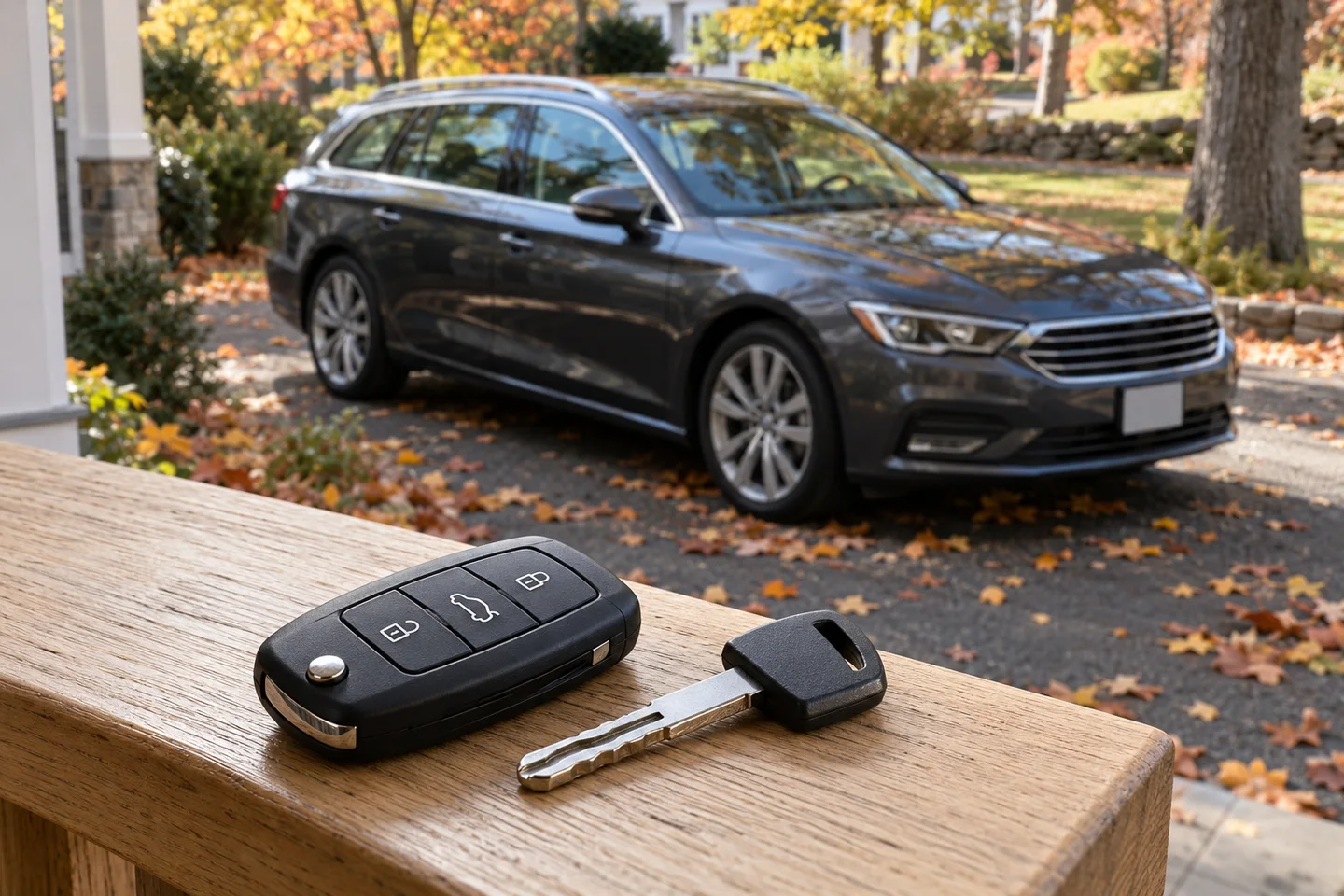
Have the make, model and year ready, along with a description of the key or fob. Mention whether you normally insert a blade, use a folding key or carry a separate fob for starting. Include any visible identifying information when asked, but do not post vehicle documents publicly.
Compatibility needs an individual check. The same model name can involve different key arrangements, and a similar-looking fob does not establish that it will work. Our automotive locksmith overview helps distinguish access trouble from a key-function problem before the replacement discussion begins.
03 /
Explain what stopped working
A lost key has no symptoms to describe, but a damaged or unreliable one does. Say whether the blade is bent, the casing is broken, the buttons are unresponsive or the vehicle fails to recognize it. Explain whether the problem happens every time and whether another key produces the same result. Keep damaged pieces available for identification.
04 /
Define the functions you need
Avoid forcing a damaged key or assuming that replacing the entire key will solve a fault elsewhere in the vehicle. The useful goal is a clearly defined outcome: another usable key, replacement of a missing one or assessment of an existing key that has become unreliable. Ask what functions the proposed replacement is intended to provide.
05 /
Agree on the request before arranging work
Give the vehicle's actual Belmont location and say whether it is locked and whether it can be started. If you are near Leonard Street or Cushing Square, add the street number or parking-area entrance rather than relying only on the landmark. Identify the owner or authorized person who will be available and ask what documents are needed.
Call 857-226-3269 to discuss the vehicle, current availability and the proposed charges. Use the contact checklist if you are gathering details for someone else. Once a compatible replacement is arranged, decide where a spare can be kept separately so one misplaced key does not leave every key unavailable.
A little clarity
before you call.
Can I ask for an extra key while I still have one?
Yes. State that you have a working key and describe which functions it performs. The vehicle and key system still need an individual compatibility check.
Will a similar-looking replacement fob work?
Appearance alone does not establish compatibility. Confirm the exact vehicle details and key system before choosing or arranging a replacement.