

 Lockout help
 Home locks
 Business locks
 Car access
 Car keys
 Rekeying
 Lock repair
 Garage doors
Malden · Map the keys before the change
Locksmith Malden MA
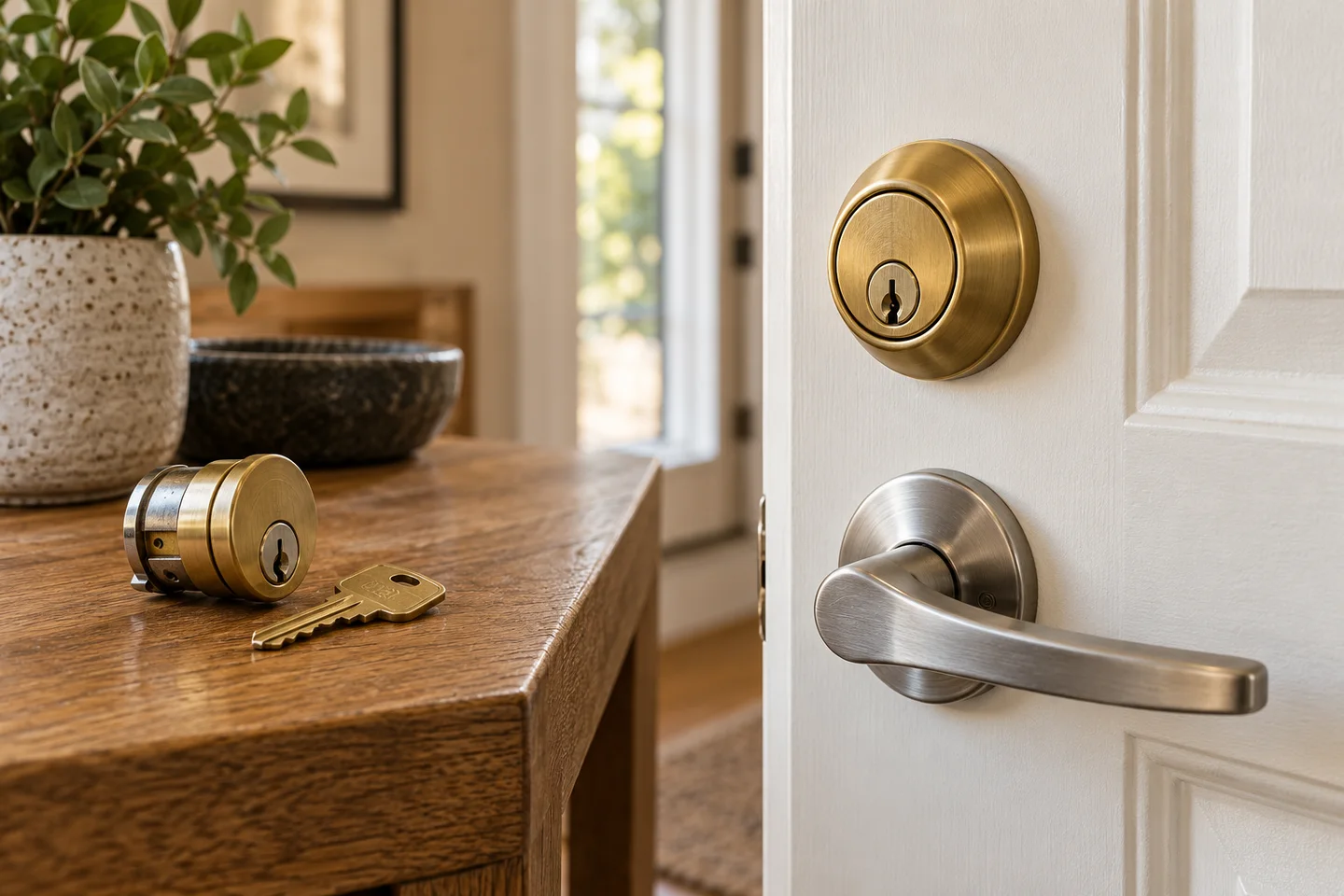
Before a business key change, it helps to know where each existing key leads. For a Malden request, a simple entrance inventory can reveal which doors need a new key arrangement and which should remain separate.
01 /
Follow a key through a normal working day
Commercial Street connects Pleasant Street toward the Medford line and Malden Center. For a business in that setting, think beyond the name on the frontage: what does someone unlock on arrival, which other doors do they use, and how do they secure the premises when leaving?
Write down the entrances involved and the people who need continued access. Record missing or unreturned keys without assuming every door uses the same cylinder. That is useful preparation for a rekeying enquiry, especially when you want to change access while retaining suitable working hardware.
02 /
Keep the business's doors and shared doors distinct
A key may open a private business entrance and a common corridor, but the authority to change those locks can be different. Identify the person approving the business work and the manager responsible for any shared door. Include both in the scope discussion instead of assuming one approval covers the entire building.
The commercial locksmith page explains how entrance identification and key handover fit together. State whether you want fewer keys, a changed set of key holders, or both. A shared-key arrangement depends on the actual hardware as well as the access boundaries the authorized person wants to preserve.
03 /
Note each lock’s condition
Beside each entrance, note whether the key turns normally and the door closes and latches reliably. If a handle is loose or a lock only works after extra pressure on the door, include that observation. A new key arrangement should not obscure a separate repair or replacement need.
Call 857-226-3269 with the full Malden address and the main entrance involved to check availability. For a large request, begin with the access goal and the door list rather than guessing which parts to buy. Ask how assessment, proposed work, and any unresolved compatibility questions will be explained.
A little clarity
before you call.
What is the simplest useful key inventory?
List each affected door, the key that opens it, who should keep access, and whether the lock works normally. Add the person responsible for authorizing a change. You do not need a technical drawing to begin.
Does rekeying one entrance affect every copy of that key?
The intended change concerns the cylinder being rekeyed, not automatically every other door that an existing key opens. Identify all relevant entrances and discuss the full arrangement before choosing the scope.