

 Lockout help
 Home locks
 Business locks
 Car access
 Car keys
 Rekeying
 Lock repair
 Garage doors
Home entries & everyday use
Home locks for the way you use your doors.
A residential locksmith request often starts with a change at home: a move, a missing key or a door that has become difficult to use. Work out which of those changed before choosing new hardware.
01 /
A new household does not always need a new lock
After a move, the immediate concern may be who still has a working key. Make a simple inventory of the doors you use: front, side, rear and any separate pedestrian garage entrance. Record which key operates each one and who needs access. This gives a much clearer starting point than a request to change every lock.
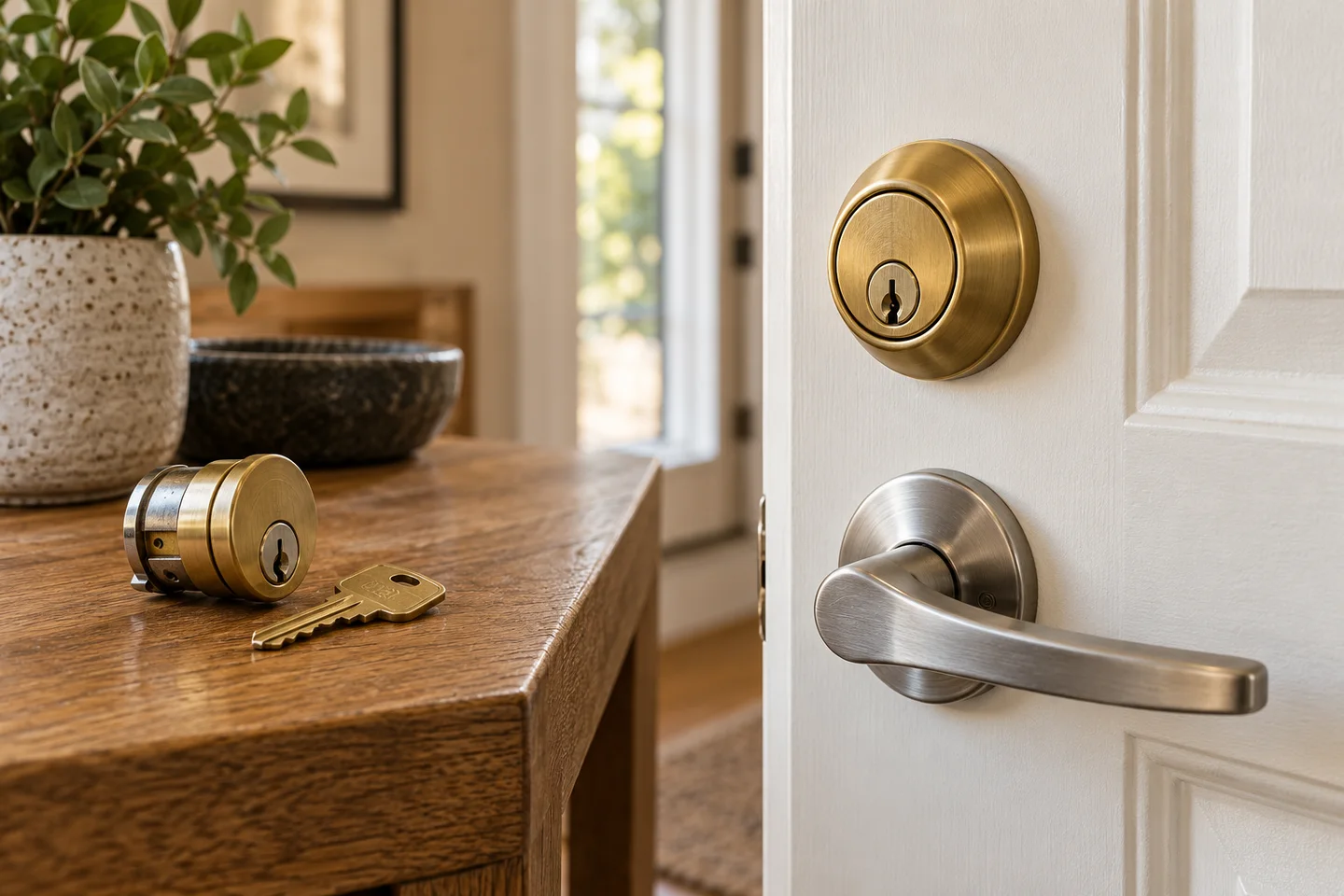
When existing hardware works well, rekeying compatible locks may change which key operates them while keeping the lock in place. Hardware condition and compatibility determine whether that approach fits. If you would also like fewer keys, mention that goal; sharing a key across doors depends on the cylinders involved.
02 /
Notice how the door behaves
A key that is difficult to turn may seem like a lock problem, while the door may be pressing against the latch or bolt. A handle that feels loose, a latch that does not catch and a key that will not enter are different symptoms. Describe what happens during ordinary use without forcing the mechanism or dismantling it.
The repair and replacement discussion considers both hardware operation and how the door closes. Replacing a cylinder alone will not necessarily correct a door that does not meet its frame properly. Mention when the symptom began, whether it is intermittent and whether all your keys behave the same way.
03 /
Plan the change around your household
For an apartment or shared house, identify the door you control and the doors used by other occupants. Your unit lock may be separate from a building entrance, and a key may serve more than one purpose. Before planning changes, involve the person responsible for shared hardware and explain whether existing keys must continue to work elsewhere.
Around Belmont Center, Cushing Square or Waverley, a neighborhood name helps locate the enquiry. The actual street, unit and entrance make it actionable. Our door identification guide gives examples of the details that help distinguish a private entrance from a common one.
Tell us whether your priority is withdrawing an old key, correcting unreliable operation, replacing damaged hardware or improving the way an entrance is used. If you hope to retain an existing handle or finish, say so before work is planned. Photos of the inside and outside hardware can help explain the request, without establishing fit on their own.
Call 857-226-3269 with the Belmont address, number of doors and a brief description. Discuss the proposed scope, compatible options and charges before agreeing to the work. Keep a record of the completed key changes so the next household handover starts with a clear inventory.
A little clarity
before you call.
Can I keep the handle and change the key?
That may be possible when the existing cylinder is compatible with rekeying and the hardware is in suitable condition. Describe the lock and the result you want before arranging work.
Should I include the shared front door in my request?
Mention it, especially if one key operates both doors. Changes to shared hardware should be discussed with the person authorized to manage that entrance.