

 Lockout help
 Home locks
 Business locks
 Car access
 Car keys
 Rekeying
 Lock repair
 Garage doors
Key, latch, handle & fit
Lock trouble? Start with the symptom.
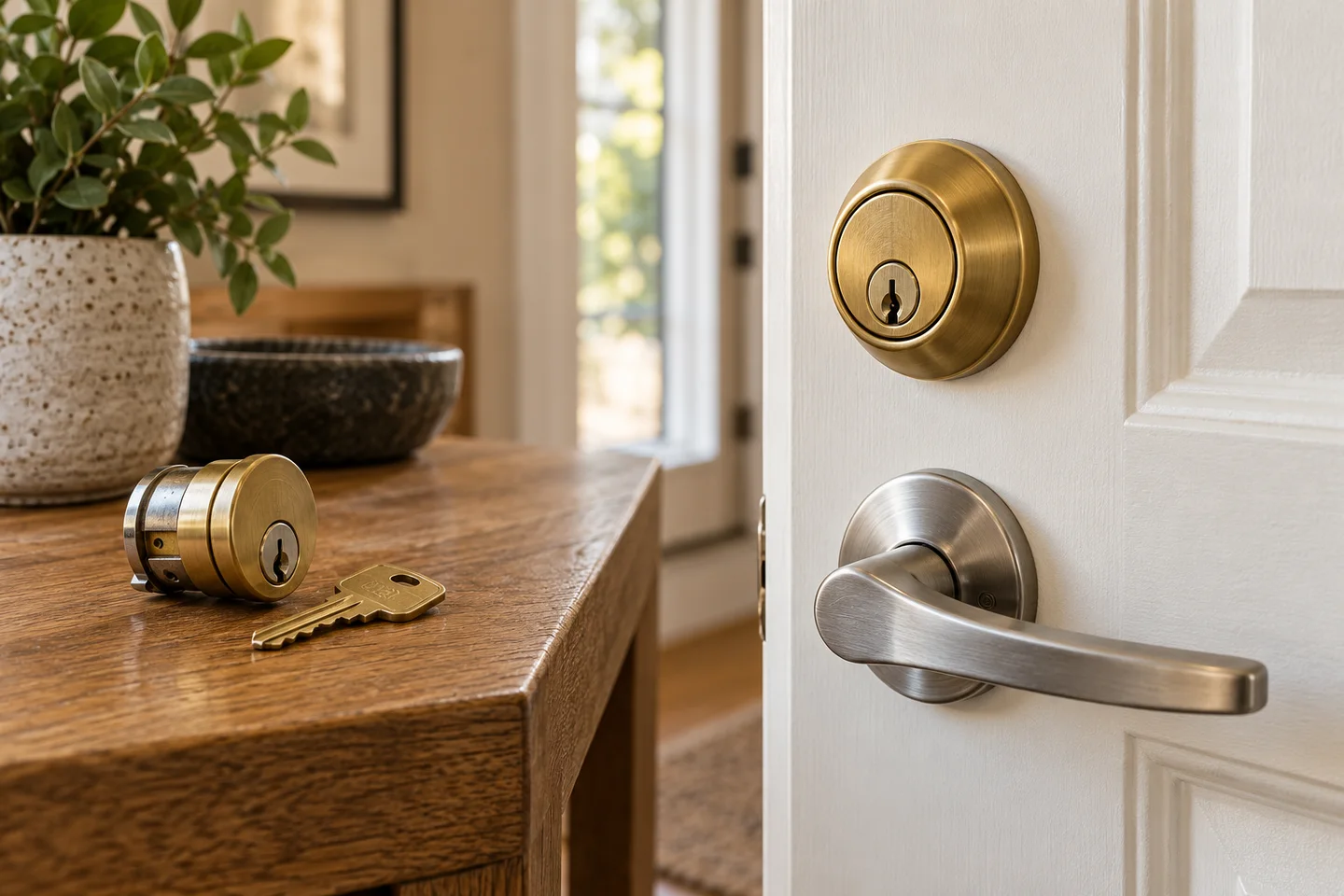
The part you touch is not always the source of a door problem. A key, cylinder, latch, handle and frame work together; useful observations help explain what has become unreliable.
01 /
What happens during ordinary use?
Start with the action that fails. Perhaps the key will not enter fully, it turns without releasing the latch or the handle moves but the door stays shut. A door that does not catch when closed is another distinct symptom. Explain what you notice without forcing the key or testing a door in a way that could leave you locked out.
Mention whether the problem began suddenly or developed over time, whether every key behaves the same way and whether there is visible damage. A photo can help describe the hardware, but it does not replace checking the fit and mechanism. If you are already outside with no access, begin with lockout help and explain the operating fault as part of that request.
02 /
Look at the door as well as the lock
A bolt needs to meet the opening in the frame, and a latch needs to catch securely. If closing the door requires lifting, pushing or pulling in an unusual way, describe that behavior. Replacing a cylinder alone may not address a fit problem, just as adjusting a door will not necessarily repair a damaged lock mechanism.
For a home, explain whether the affected hardware is on the main entrance, a side door or a private unit door. The residential locksmith overview covers how those entrances fit into a household key plan. A shared entrance should also include the person responsible for the building's hardware.
03 /
When replacement enters the discussion
Replacement may be discussed when hardware is damaged, unsuitable for the intended use or cannot be repaired practically. The proposed lock must fit the door and work with its other parts. If retaining an existing handle, finish or appearance matters to you, make that part of the enquiry before parts are selected. Belmont has varied residential architecture, so a description of an older door is more helpful than assuming it accepts a standard replacement. Explain what is currently fitted and what you hope to keep. Where appearance or building requirements need approval, identify the responsible decision-maker before agreeing to a change.
04 /
A key change is a separate outcome
If the lock operates normally but you do not know who holds copies, rekeying compatible hardware may address that concern. If both reliability and key possession are issues, state both. Our new key or new lock guide helps you compare those goals without assuming every request needs complete replacement.
Call 857-226-3269 with your Belmont address, the affected entrance and a short symptom description. Discuss the proposed repair or replacement, the intended result and charges before agreeing. After work, ask how the door should operate and what to report if the original symptom returns.
A little clarity
before you call.
My key works only when I pull the door. Is the key the problem?
That behavior is useful to report because door fit can affect lock operation. Avoid forcing it and describe the action needed; an assessment can distinguish the hardware concern from the fit issue.
Can I ask to retain the existing handle?
Yes. Mention what you want to retain before work is planned. Condition, dimensions and compatibility determine whether it fits the proposed repair or replacement.