

 Lockout help
 Home locks
 Business locks
 Car access
 Car keys
 Rekeying
 Lock repair
 Garage doors
A clearer household decision
A new key or a new lock?
You may want an old key to stop working, a difficult door to operate properly or damaged hardware replaced. Those goals can overlap, but they do not mean the same thing.
01 /
Question one: who can still use the key?
After a move, a lost key or a household handover, the concern may be uncertainty about copies. Start with the affected doors. A key may operate only the front deadbolt, or it may also work at a side entrance. Do not assume a returned key accounts for every copy that has been made.
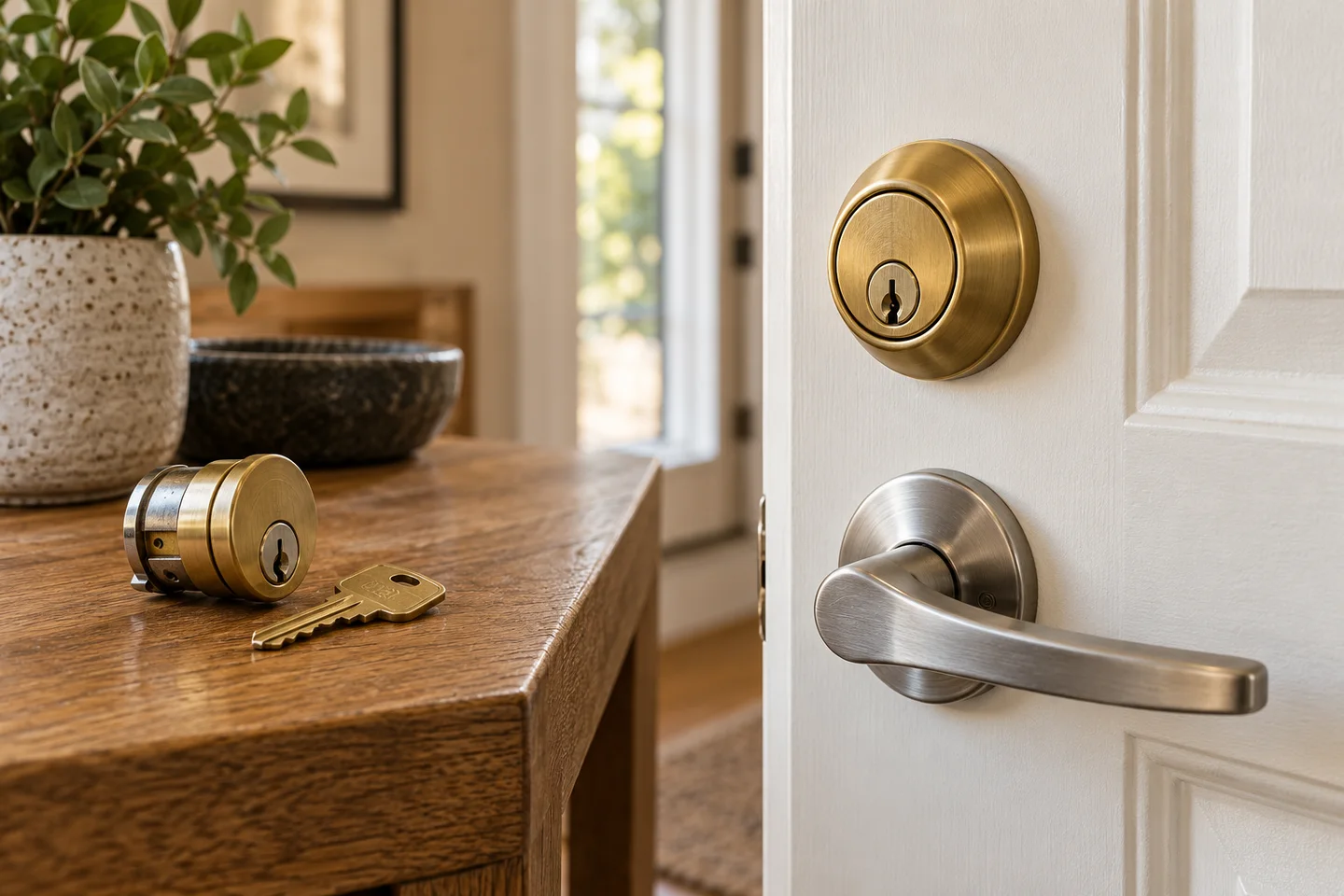
If the locks operate reliably, rekeying compatible cylinders may change which key operates them while retaining useful hardware. The suitability of the cylinders needs to be checked. Ask which old keys will stop working and whether the proposed arrangement covers every door you intended to include.
02 /
Question two: does the door work properly?
Use ordinary observations. Does the key enter and turn normally? Does the latch catch when the door closes? Does the handle feel secure? If you have to push or lift the door in an unusual way, describe that behavior without forcing it. A changed key arrangement does not by itself repair a damaged mechanism or correct how a door meets its frame.
Our lock repair and replacement page separates key, latch and door-fit symptoms. Tell the person assessing the request whether all keys behave the same way and when the trouble started. That is more informative than choosing a replacement before anyone knows which part of the door is failing.
03 /
Write down a household key inventory
Make one line for each entrance, including side and rear doors you use less often. Record which key works there, whether the lock operates smoothly and who needs ongoing access. Include a separate pedestrian garage entrance if present. Keep the list private; it is a planning aid, not something to display with keys or property documents.
In a shared building, distinguish private unit hardware from common entrances and involve the responsible owner or manager. One key may serve both, so explain that relationship before changing either cylinder. The residential locksmith overview shows how household use, authorization and hardware fit belong in the same conversation.
04 /
When retaining the existing hardware matters
You may like an existing handle or want the finished entrance to retain a consistent appearance. State that preference early, along with any operating fault. Keeping a handle, changing a cylinder and replacing a complete lock are different scopes of work. Condition, dimensions and compatibility will shape the options.
Belmont's varied residential character does not tell you which lock fits an individual door. Describe what is fitted rather than assuming an older or newer home uses a particular mechanism. If a building manager or another responsible party needs to approve a visible change, bring that person into the discussion before selecting replacement hardware.
05 /
Make the final request about the result
A clear request might be: keep suitable working hardware, withdraw the old household key and discuss whether the front and side doors can share the new key. Another might prioritize a latch that fails, with a key change as an additional need. If you cannot identify the affected entrance, begin with our door description guide.
Call 857-226-3269 with the Belmont address and your inventory. Discuss the proposed work, compatibility and charges before agreeing. Afterward, record which doors changed and distribute the finished keys deliberately, including a spare held separately by someone you trust.
A little clarity
before you call.
Do I need a replacement lock after moving?
A move creates a key-control question. Compatible functioning cylinders may be suitable for rekeying; hardware condition and your desired result determine whether replacement should also be discussed.
Can one visit address both a key change and a sticking door?
Describe both needs when making the enquiry so the proposed scope can be assessed. Availability and the appropriate work depend on the actual hardware and symptoms.